
Berkeley Center for New Media
UC Berkeley School of Information
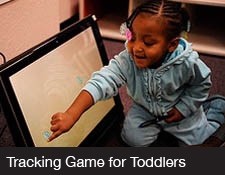
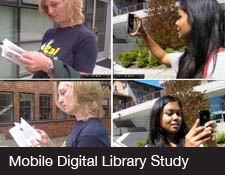
Journal ArticlesRyokai, K., Jacobo, S., Rivero, E., Park, J. (2022). Examining children’s design processes, perspective-taking, and collaboration when using VR head-mounted displays. International Journal of Child-Computer Interaction. 33, 100451. [PDF] Ryokai, K., Bulalacao, N.M., Jacobo, S., Boradkar, S., Dobson, K. (2022). Shifting Design Perspectives: Touch, Co-Location, and Sharing Objects during the Pandemic. Multimodal Technologies and Interaction. 6 (9), 74. [PDF] Benally, J., Palatnik, A., Ryokai, K., Abrahamson, D. (2022). Learning Through Negotiating Conceptually Generative Perspectival Complementarities: The Case of Geometry. For the Learning of Mathematics. 42 (3), 34-41. [PDF] Ryokai, K., Agogino, A.M. (2013) Off the Paved Paths: Exploring Nature With a Mobile Augmented Reality Learning Tool. International Journal of Mobile Human Computer Interaction. 5(2), pp. 21-49. [PDF] Ryokai, K., Farzin, F., Kaltman, E., Niemeyer, G. (2013). Assessing Multiple Object Tracking in Young Children Using a Game. Educational Technology Research and Development, Volume 61, Issue 2 (2013), Page 153-170. [PDF] Ryokai, K., Agogino, A.M., Oehlberg, L. (2012). Mobile Learning with the Engineering Pathway Digital Library. International Journal of Engineering Education. Vol. 28, No. 5, pp. 1119–1126, 2012. [PDF] Refereed Conference Papers
| |
|---|---|
 |
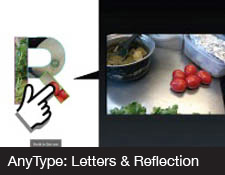
Devendorf, L., Ryokai, K. (2013). AnyType: Provoking Reflection and Exploration with Aesthetic Interaction. In Proceedings of the 31st international conference on Human factors in computing systems (CHI 2013). ACM, New York, NY, USA, 10 pages. [PDF]
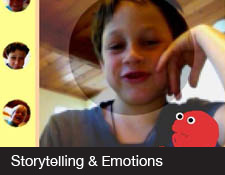
Ryokai, K., Raffle, H., Kowalski, R. (2012). StoryFaces: pretend-play with ebooks to support social-emotional storytelling. In Proceedings of the 11th International Conference on Interaction Design and Children (IDC '12). ACM, New York, NY, USA, 125-133. [PDF] Charoenying, T., Gaysinsky, A., Ryokai, K. (2012). The choreography of conceptual development in computer supported instructional environments. In Proceedings of the 11th International Conference on Interaction Design and Children (IDC '12). ACM, New York, NY, USA, 162-167. [PDF] |
|
|
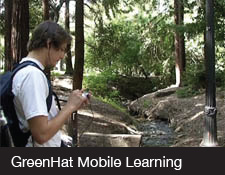
Ryokai, K., Oehlberg, L., Manoochehri, M., and Agogino, A. (2011) GreenHat: exploring the natural environment through experts' perspectives. InProceedings of the 28th international Conference on Human Factors in Computing Systems. ACM, New York, NY, USA, 2149-2152. [PDF] Rosner, D. K. and Ryokai, K., (2010). "The Present of Captured Time": Giving Gifts of Digitally Augmented Craft Objects. In Proceedings of the 28th international Conference on Human Factors in Computing Systems (Atlanta, GA, USA, April 10 - 15, 2010). CHI '10. ACM, New York. [PDF] Faridani, S., Bitton, E., Goldberg, K., and Ryokai, K., (2010). A User Study of Opinion Space: A Scalable Tool for Browsing Online Comments. In Proceedings of the 28th international Conference on Human Factors in Computing Systems (Atlanta, GA, USA, April 10 - 15, 2010). CHI '10. ACM, New York. [PDF] |
|
|
Ryokai, K., Lee, M. J., and Breitbart, J. M., (2009). (Best Paper) Children's storytelling and programming with robotic characters. In Proceeding of the Seventh ACM Conference on Creativity and Cognition (Berkeley, California, USA, October 26 - 30, 2009). C&C '09. ACM, New York, NY, 19-28. [PDF] |
|
|
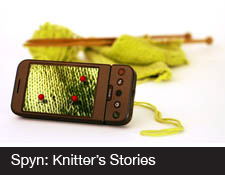
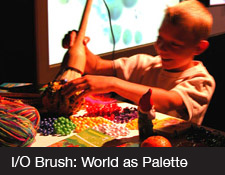
Rosner, D. K. and Ryokai, K., (2009). (Best Paper) Reflections on craft: probing the creative process of everyday knitters. In Proceeding of the Seventh ACM Conference on Creativity and Cognition (Berkeley, California, USA, October 26 - 30, 2009). C&C '09. ACM, New York, NY, 195-204. [PDF] Rosner, D. K., Ryokai, K., (2008) "Spyn: Augmenting Knitting to Support Storytelling and Reflection." In Proceedings of the 10th international Conference on Ubiquitous Computing (Seoul, Korea, September 21 - 24, 2008). UbiComp '08, vol. 344. ACM, New York, NY, 340-349. [PDF] Ryokai, K., Marti, S., Ishii, H. (2004). "I/O Brush: Drawing with Everyday Objects as Ink." In Proceedings of Conference on Human Factors in Computing Systems (CHI 2004). [PDF] Ryokai, K., Vaucelle, C., and Cassell, J. (2002). "Literacy Learning by Storytelling with a Virtual Peer." In Proceedings of Computer Support for Collaborative Learning (CSCL 2002). [PDF] Ryokai, K. and Cassell, J. (1999). "Computer Support for Children's Collaborative Fantasy Play and Storytelling", In Proceedings of Computer Support for Collaborative Learning (CSCL 1999). [PDF] |

My field of research is tangible embodied computing, a subfield of human-computer interaction (HCI). I study representation, physicality, and interactivity of personal data and information systems, particularly in the context of mental health, social networks, and educational applications.
Kimiko Ryokai is an associate professor at the UC Berkeley School of Information and Berkeley Center for New Media. Kimiko's work on technologies to support creativity and learning has been funded by NSF, Nokia, and Google, and has been presented at the premier HCI conferences including CHI, SIGGRAPH, Creativity & Cognition, IDC, Ubicomp, and CSCL, winning several best paper awards. Kimiko is also an award-winning designer and inventor (IDSA Gold Award) and has exhibited at international venues such as Ars Electronica, Children's Museum Kyoto Japan, AIGA, and IDSA. Kimiko received her MS and PhD in Media Arts & Sciences from MIT in 1999 and 2005 respectively. Before joining UC Berkeley, Kimiko worked at IDEO as an interaction design and human factors specialist.
|
|
|
|---|